Fabrics
Linen curtains: pros, cons and how to care for them

Linen curtains are one of the most popular choices in modern homes, and it's easy to see why. They have a soft, slightly uneven texture that looks natural and expensive. Sunlight glows through them beautifully. They suit almost every style, from Scandinavian and coastal to rustic, modern and minimalist. And they bring a relaxed, lived-in feeling that's hard to get from other fabrics.
But linen has a reputation too. It wrinkles. It can shrink. It may fade in strong sun. And real linen costs more than cotton or polyester. So are linen curtains worth it? This guide gives you an honest answer: what linen is, its real pros and cons, how to choose between pure linen, blends and linen-look fabrics, how to care for linen so it lasts, and how to style it beautifully.
What is linen?
Linen is a natural fabric woven from the fibres of the flax plant. It's one of the oldest textiles in the world. Flax fibres are long and strong, which makes linen durable, and they vary slightly in thickness, which gives linen its characteristic texture with small irregular lines called slubs.
Linen is often associated with Europe, where flax has been grown for centuries. You'll see curtains described as "French linen" or "Belgian linen", which usually refers to where the flax was grown or woven. These can be very high quality, but the origin alone doesn't guarantee it. Fabric weight, weave and finish matter more.
The pros of linen curtains
A beautiful natural texture
Linen's slubbed, slightly irregular weave catches the light and adds depth even in plain colours. It looks relaxed and natural rather than flat and uniform.
A soft, airy glow
Unlined linen filters light softly, creating a warm, diffused glow. Rooms feel bright but calm, with harsh glare softened.
Breathable and comfortable in warm weather
Linen is breathable and doesn't trap heat the way heavy synthetic fabrics can. In warm climates it helps rooms feel airy while still giving shade and privacy.
Strong and long-lasting
Flax fibres are strong, and good linen can last many years. It also gets softer and more beautiful with each wash.
Timeless style
Linen has been fashionable for centuries and suits a huge range of interiors. Neutral linen curtains rarely date.
A natural, renewable fibre
Flax generally needs less water and fewer pesticides than conventional cotton, and linen is biodegradable. For many people, that's an important part of its appeal.
The cons of linen curtains
It wrinkles
This is the big one. Pure linen creases easily, especially when it's folded, packed or washed. Many people love the relaxed, slightly rumpled look; others find it untidy. Hanging and steaming helps, but some creasing is part of linen's character.
It can shrink
Linen that hasn't been pre-washed can shrink noticeably the first time it's washed, especially in hot water or a hot dryer. Pre-washed or stonewashed linen has already done most of its shrinking.
It fades in strong sun
Like most natural fibres, linen fades and slowly weakens with long exposure to strong sunlight. Darker colours show fading most. A lining protects it.
It's not very private when unlined
Unlined linen glows beautifully during the day, but at night, with lights on inside, people outside may see shapes through it, especially in light colours and lighter weights.
It doesn't block much light on its own
Unlined linen filters rather than blocks light. For bedrooms, you'll need a lining or a separate blackout layer.
It costs more
Pure linen is more expensive than cotton or polyester. Good-quality linen curtains are an investment.
It can change length slightly
Linen is a loosely woven, natural fabric. It can lengthen a little after hanging as it settles, and it can react slightly to humidity. A small float or break at the hem hides this.
Pure linen vs. blends vs. linen-look
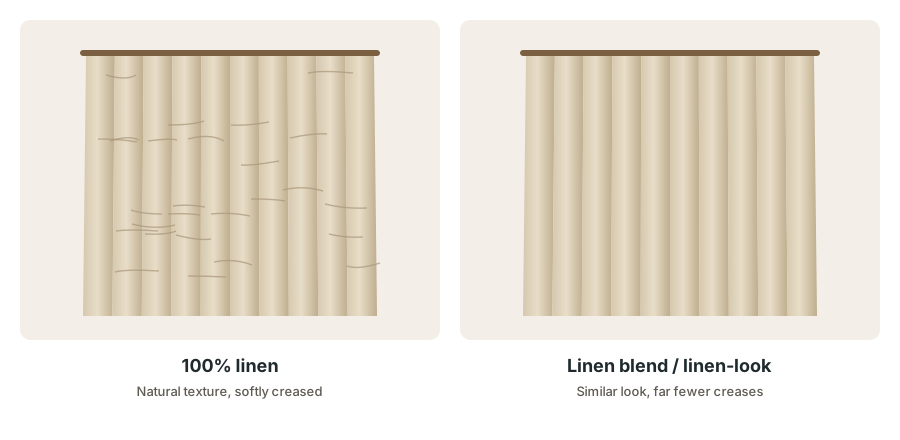
| 100% linen | Linen blend | Linen-look polyester | |
|---|---|---|---|
| Texture | Authentic, slubbed, natural | Close to linen, slightly smoother | Imitates linen; quality varies |
| Wrinkles | Many | Fewer | Very few |
| Shrinkage | Possible unless pre-washed | Less | Minimal |
| Fading in sun | Moderate | Moderate | Good resistance |
| Breathability | Excellent | Good | Lower |
| Care | Gentle | Easier | Easiest |
| Price | Highest | Medium | Lowest |
100% linen
The real thing. Choose it if you love authentic texture, accept some creasing, and are happy to wash gently.
Linen blends
Linen mixed with cotton, viscose or polyester. Blends keep much of linen's look and feel while reducing wrinkles, shrinkage and cost. A linen-cotton blend feels soft and natural; a linen-polyester blend is more practical and wrinkle-resistant.
Linen-look (faux linen)
Usually 100% polyester woven to imitate linen's slubbed texture. Good versions look convincing from across the room, resist wrinkles and fading, and are easy to wash. They're less breathable and lack the softness of real linen up close. They're a smart choice for rentals, sunny windows, humid rooms and tight budgets.
Always check the fibre content on the label. "Linen-style" or "linen texture" usually means no real linen at all.
Choosing the right linen weight
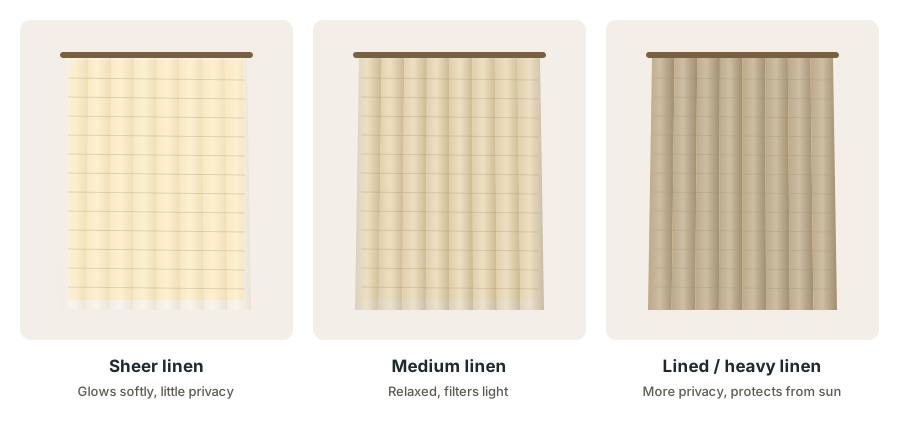
- Sheer or lightweight linen: glows with light, gives a dreamy, airy look, but offers little privacy. Ideal for layering behind heavier curtains, or for rooms where privacy isn't important.
- Medium-weight linen: the most common choice for curtains. It filters light softly, hangs in relaxed folds and gives reasonable daytime privacy.
- Heavyweight or lined linen: drapes in fuller folds, gives more privacy and protects the fabric from sun. Lined linen is the best choice for most living rooms and for bedrooms combined with a blackout layer.
Product listings sometimes give fabric weight in grams per square metre (gsm). Higher numbers mean heavier, more opaque fabric. Comparing gsm between products is more reliable than comparing photos. Our curtain fabrics guide explains how to read product descriptions.
Lined or unlined linen?
Choose unlined if
- You want the soft, glowing, airy look.
- The window doesn't get hours of strong direct sun.
- Privacy at night isn't a concern, or you have blinds as well.
- You want curtains that are easy to wash at home.
Choose lined if
- The window gets strong sun, which would fade unlined linen.
- You want more privacy and fuller, heavier folds.
- The curtains are for a bedroom (consider a blackout lining).
- You want a uniform look from outside.
A useful middle ground is layering: unlined linen curtains on the front rod, with a blackout shade or plain blackout curtain behind. You keep linen's glow during the day and get darkness and privacy at night. Our guide to blackout curtains explains how to set this up.
Linen in sunny and humid climates
- Sun: line linen curtains on windows that get strong afternoon sun, or choose lighter colours, which show fading less. Linen-look polyester is a good alternative for very sunny windows.
- Humidity: linen is breathable, which helps, but any natural fabric can develop mildew if it stays damp. Let air circulate around the curtains, avoid pressing them against damp walls or windows covered in condensation, and wash them regularly.
- Heat: unlined linen keeps rooms airy. If you need to block heat, add a thermal lining or a light-coloured shade behind.
How to care for linen curtains
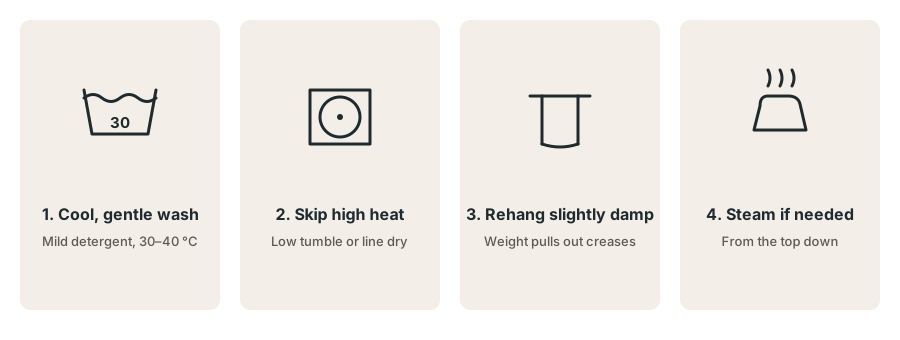
Always follow the care label first. These general guidelines suit most washable linen curtains:
Regular care
- Vacuum or shake them every few weeks to remove dust, using a soft brush attachment.
- Air them by opening the window on dry, breezy days.
- Spot clean small marks with cool water and a little mild detergent. Dab, don't rub.
Washing
- Remove hooks and rings. Grommets can usually stay if the label allows machine washing.
- Wash cool and gentle, typically 30–40 °C on a delicate or wool cycle, with a mild detergent. Hot water is the main cause of shrinkage.
- Avoid bleach, which weakens linen fibres. For whites, use an oxygen-based stain remover if the label allows.
- Don't overload the machine. Curtains need room to move to rinse properly and crease less.
- Use a short, gentle spin. High spin speeds set deep creases.
Drying
- Line dry in the shade, or tumble dry on the lowest heat and remove while still slightly damp.
- Avoid hot tumble drying, which causes shrinkage and sets wrinkles.
- Rehang while slightly damp. The weight of the curtain pulls out many creases as it dries.
Ironing and steaming
- Linen tolerates high heat (three dots on the iron symbol), but iron it while slightly damp, on the reverse side for dark colours, to avoid shine.
- A handheld steamer is easier: steam the curtains as they hang, from top to bottom.
- Or simply embrace the relaxed look. Many people prefer linen slightly rumpled.
Lined linen
Lined linen curtains are often best dry cleaned, because the face fabric and lining can shrink at different rates. Check the label before washing at home.
How to deal with shrinkage
- Buy pre-washed, stonewashed or "pre-shrunk" linen where possible.
- Buy a little longer than you need if the linen isn't pre-washed, and hem after the first wash.
- Hang new linen curtains for a week or two before hemming, so the fabric settles.
- Choose a slight break on the floor rather than a precise float, so small changes in length don't show.
- Always wash cool and avoid high-heat drying.
Styling linen curtains
Colours
- Natural flax and oatmeal: the classic linen look. Warm, calm and endlessly versatile.
- White and ivory: fresh, bright and coastal.
- Soft greys and stone: modern and calm, lovely with white walls.
- Sage, olive and earthy greens: relaxed and natural, especially with plants and wood.
- Terracotta, rust and clay: warm and characterful.
- Charcoal and navy: dramatic and cosy, but prone to fading in strong sun unless lined.
Headings
Linen looks especially good with simple headings that suit its relaxed character: grommets, back tabs, tab tops, or pinch pleats in a soft, unstructured style. See our curtain headings guide for the pros and cons of each.
Length and fullness
Floor length, or a gentle break, suits linen's relaxed drape. Linen looks best with generous fullness of around 2× the rod width, because its texture shows in the folds.
Hardware
Natural wood, matte black, aged brass and bronze rods all complement linen. Avoid very shiny chrome, which can look cold against linen's soft texture.
Pairing with other fabrics
Linen pairs well with cotton, wool throws, rattan, jute rugs, timber furniture and plants. Layer it with sheer linen or voile for extra softness.
How to spot good-quality linen curtains
- Check the fibre content. Look for "100% linen" or the exact blend percentage. Vague terms like "linen-style" usually mean polyester.
- Check the weight. If gsm is listed, compare products. Very light linen can look thin and see-through as a main curtain.
- Hold it to the light (or look at backlit product photos). Good linen has an even weave with natural slubs; very uneven, loose or patchy weaves may wear poorly.
- Look for "pre-washed" or "stonewashed". These are softer and shrink less.
- Check the finishing. Straight, deep hems, neat corners and even headings are signs of a well-made curtain.
- Look for certifications such as OEKO-TEX Standard 100, which means the fabric has been tested for certain harmful substances.
- Check the return policy. Linen colours can look different in your light than in photos, so order swatches or buy from a shop that accepts returns.
Linen curtain sizes and fullness
Linen looks best with generous fullness, because its texture shows in the folds. Aim for a total panel width of about 2 times the rod width, or 2.5–3 times for sheer linen. Choose floor length or a slight break; the break hides small changes in length as linen settles or reacts to humidity. Our guides to curtain fullness and curtain length show how to calculate both.
Lining options for linen curtains
- Cotton lining: protects linen from sun, adds body and privacy, and keeps the natural feel.
- Blackout lining: turns linen curtains into bedroom curtains, while keeping the linen look from inside.
- Thermal lining: adds insulation for rooms that get very hot or cold.
- Detachable liners: hook-on liners hang behind the curtain on the same hooks or rings. You can remove them to wash the linen separately, or take them off in seasons when you want more light.
Detachable liners are particularly useful for linen, because the face fabric and lining can then be washed separately and shrink at their own rates.
Linen with children and pets
Linen is strong, so it stands up well to everyday life. Its natural texture also hides small marks and creases better than smooth fabrics. For homes with young children or pets, choose washable linen or a linen blend, a floating hem so curtains don't drag on the floor, and a heading that's easy to take down for washing, such as grommets.
Refreshing older linen curtains
- Wash and rehang damp to restore their drape and remove dust.
- Add a lining if they've started to fade, to protect them from further sun damage.
- Turn them around, swapping left and right panels, so fading evens out.
- Re-hem if they've lengthened slightly over time.
- Dye them a darker shade if the colour has faded unevenly. Linen takes fabric dye well; follow the dye manufacturer's instructions.
Linen styling ideas by interior style
Scandinavian
White, ivory or pale grey linen in simple grommet or tab panels, on a slim black or light wood rod. Keep the look airy, with generous fullness and floor-length hems.
Coastal
White, sand or soft blue linen, ideally sheer or lightweight, so it moves in the breeze. Pair with rattan, driftwood tones and natural fibres. Line it on very sunny windows.
Rustic and farmhouse
Natural flax or oatmeal linen with tab tops or ring clips on a dark wooden or iron rod. A slightly crumpled look fits perfectly here.
Modern minimal
Stone, charcoal or warm white linen in a clean pinch pleat or wave heading, on a slim track or a matte black rod, hung from near the ceiling to the floor.
Bohemian
Earthy terracotta, rust, ochre or olive linen, layered with sheers, plants and woven textures. Mix tones rather than matching exactly.
Classic and traditional
Lined linen in natural or soft neutral shades with pinch pleats, a slight break on the floor, and an aged brass or bronze rod. Tiebacks add a finishing touch.
Where linen curtains work best
- Living rooms: the classic home for linen. Medium-weight or lined.
- Bedrooms: lined, or layered with a blackout shade or curtain.
- Dining rooms: relaxed elegance, especially in natural or soft neutral tones.
- Sunrooms and coastal homes: sheer or light linen, ideally in light colours.
- Kitchens: linen café curtains look charming but need frequent washing; choose a washable blend.
Medium-weight linen and linen blends are also lovely to sew. If you fancy making your own, our beginner's guide on how to sew simple unlined curtains covers everything from pre-washing to the final hem.
Linen vs. cotton curtains
Linen and cotton are the two most popular natural curtain fabrics, and they're often compared:
- Look: linen has a textured, slubbed, relaxed appearance; cotton is smoother and crisper.
- Feel: linen is slightly coarser at first and softens with washing; cotton is soft from the start.
- Wrinkles: linen creases more easily than cotton.
- Strength: linen fibres are generally stronger and longer-lasting.
- Breathability: both breathe well; linen feels especially airy in hot weather.
- Price: cotton is usually less expensive.
- Colour: cotton takes dye very evenly, giving clear, crisp colours and prints; linen colours look softer and more muted.
Choose linen for texture and a relaxed, natural mood. Choose cotton for a crisper look, easier care and a lower price. A linen-cotton blend sits neatly in between.
Are linen curtains worth the money?
If you love natural texture, a relaxed look and a beautiful soft glow, and you're happy to wash gently and accept some creases, yes. Good linen curtains last for years and improve with age.
If you want curtains that always look crisp, need to block light, face strong sun, or need to be washed often and quickly, a linen blend or a high-quality linen-look polyester will probably make you happier, at a lower price.
Common linen curtain mistakes
- Washing in hot water and drying on high heat, which shrinks the curtains.
- Hemming immediately before the fabric has settled or been washed.
- Choosing unlined dark linen for a very sunny window. It will fade.
- Expecting unlined linen to darken a bedroom. Add a blackout layer.
- Skimping on fullness. Linen looks thin and flat without enough fabric.
- Buying "linen-style" thinking it's real linen. Check the fibre content.
Frequently asked questions
Do linen curtains block light?
Unlined linen filters light softly but doesn't block it. For darkness, choose blackout-lined linen or add a blackout shade or curtain behind.
Do linen curtains shrink?
They can, especially if not pre-washed and if washed or dried hot. Pre-washed linen shrinks much less. Wash cool and avoid high-heat drying.
How do I stop linen curtains from wrinkling?
You can't stop it completely, but you can reduce it: rehang while slightly damp, steam as they hang, and choose a linen blend if you prefer a smoother look.
Can I machine wash linen curtains?
Many unlined linen curtains can be machine washed on a cool, gentle cycle. Lined linen curtains often need dry cleaning. Follow the care label.
Are linen curtains good for hot climates?
Yes. Linen is breathable and keeps rooms feeling airy. Line it or choose lighter colours on very sunny windows to reduce fading.
What's the difference between linen and linen-look curtains?
Linen is woven from flax fibres. Linen-look curtains are usually polyester woven to look like linen. Linen-look is cheaper, wrinkles less and resists fading; real linen is more breathable and has a more authentic texture.
The bottom line
Linen curtains bring a soft, natural beauty that few fabrics can match: textured, glowing and relaxed. In exchange, they ask for a little care: wash cool, dry gently, line them in strong sun, and accept a few creases as part of their charm. If that sounds like a fair deal, linen is a wonderful choice. If not, a linen blend or linen-look fabric gives you much of the style with far less fuss.
Keep reading
 Fabrics
Industrial blackout curtains: a complete guide to heavy-duty light blocking
Warehouses, studios, workshops, halls and loft homes all need serious darkness at times. Here's how to choose, size, hang and seal industrial blackout curtains that really block light.
 Fabrics
Velvet curtains: a complete guide to choosing, hanging and caring for them
Velvet curtains look luxurious, block light, keep rooms warm and quieten noise. Here's everything you need to know about velvet types, colours, hardware, hanging and care.
 Fabrics
Thermal curtains: do they really keep rooms warm or cool?
Thermal curtains promise cooler summers, warmer nights and lower energy bills. Here's how they actually work, what they can and can't do, and how to choose and hang them for the best results.