DIY & Sewing
How to wash, clean and iron curtains safely

Curtains quietly collect a surprising amount of dust, pollen, cooking smells, smoke, pet hair and outdoor pollution. Because they hang in the same place every day, it's easy to forget about them until they look dull, smell musty or start to trigger sneezes. Regular cleaning keeps them looking fresh, makes the whole room smell cleaner, and helps them last much longer.
But curtains can also be damaged by the wrong cleaning method. Hot water shrinks cotton and linen. High-heat drying cracks blackout coatings. Harsh bleach weakens fibres. And some fabrics simply shouldn't go in a washing machine at all. This guide explains how to clean every type of curtain safely, step by step, from regular maintenance to deep cleaning, stain removal and dealing with mildew.
How often should you clean curtains?
- Every week or two: a quick shake or a light vacuum, especially in busy rooms.
- Every month: a thorough vacuum with a brush attachment, top to bottom.
- Every 3–6 months: a full wash or clean for most curtains in living rooms and bedrooms.
- More often for kitchen curtains (cooking grease and smells), sheers (which show dust quickly), homes near busy roads, homes with pets or smokers, humid climates, and anyone with allergies.
Step 1: Read the care label
Every curtain should have a care label, usually sewn into a side seam or the hem. It tells you exactly what the fabric can handle. If the curtain came without a label, check the product description or the manufacturer's website.
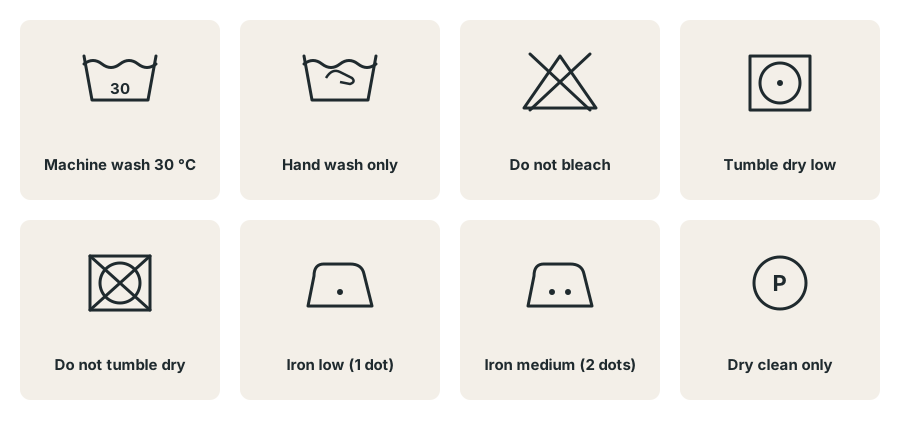
- Wash tub: machine washable. A number shows the maximum temperature; a hand in the tub means hand wash only. Lines under the tub mean a gentle or delicate cycle.
- Triangle: bleach instructions. A crossed triangle means no bleach.
- Square with a circle: tumble drying. Dots show the heat (one dot is low); a cross means don't tumble dry.
- Iron: dots show the heat setting: one for low, two for medium, three for high.
- Circle: professional dry cleaning. A crossed circle means don't dry clean.
When in doubt, choose the gentlest option: cool water, a gentle cycle, and air drying.
Step 2: Decide how to clean them
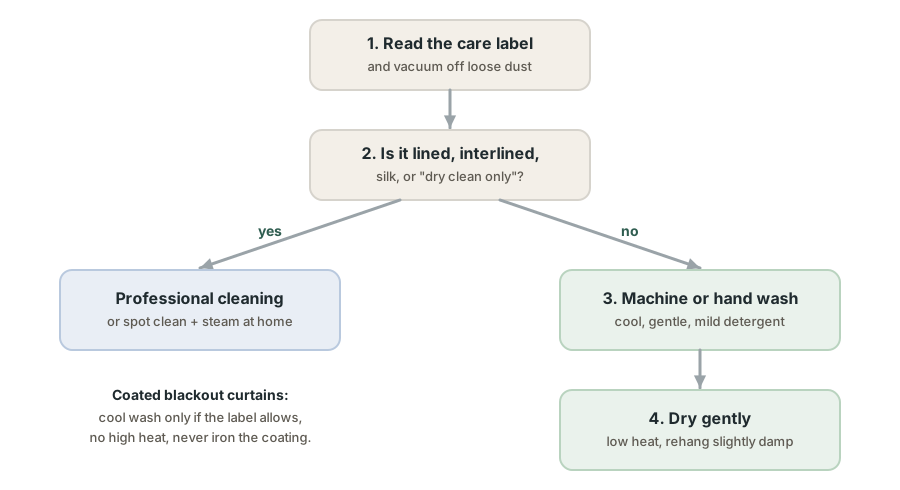
As a general guide:
- Usually machine washable: polyester, most cotton, many linen-look fabrics, voile sheers, many blackout and thermal curtains (on a gentle, cool cycle).
- Often hand wash or gentle machine wash: linen, some velvets, delicate sheers, lace.
- Usually professional cleaning: silk, interlined curtains, many lined curtains, wool, heavy velvet, curtains with delicate trims, and anything labelled dry clean only.
Regular care: vacuuming and dusting
Vacuuming is the single most effective way to keep curtains clean between washes. It removes dust before it settles deep into the fabric.
- Close the curtains so the fabric is spread out.
- Use a soft brush attachment on low suction, so the fabric isn't pulled into the nozzle.
- Work from the top down, including the heading and folds, where dust collects.
- Hold the bottom of sheers lightly so they don't get sucked in, or use a handheld vacuum on its gentlest setting.
- Don't forget the rod and rings; wipe them with a damp cloth.
For very delicate fabrics, a gentle shake outdoors or a lint roller works well.
How to machine wash curtains
- Take the curtains down and remove all hooks, rings, clips and weights that aren't sewn in. Grommets that are part of the curtain can usually stay if the label allows machine washing.
- Shake them outdoors or vacuum them to remove loose dust.
- Pre-treat any stains (see below).
- Check colourfastness on new or brightly coloured curtains: dab a hidden corner with a damp white cloth. If colour transfers, wash separately and cool, or have them cleaned professionally.
- Don't overload the machine. Wash one or two panels at a time so they have room to move, rinse properly and crease less.
- Choose a gentle or delicate cycle and cool or lukewarm water, usually 30 °C, unless the label allows warmer.
- Use a mild detergent, and less than you would for clothes. Too much detergent leaves residue that attracts dust.
- Choose a low spin speed to reduce creasing.
- Remove the curtains promptly when the cycle ends, so creases don't set.
For delicate sheers and lace, wash them in a large mesh laundry bag or a pillowcase to prevent snagging.
How to hand wash curtains
- Fill a bathtub or large basin with cool or lukewarm water and a small amount of mild detergent. Mix well.
- Submerge the curtain and swish it gently. Let it soak for about 10–15 minutes.
- Gently squeeze the water through the fabric. Don't scrub, twist or wring, which can stretch and crease it.
- Drain and rinse in clean water, repeating until no soap remains.
- Press out excess water by rolling the curtain in a large towel or pressing it against the side of the bath.
How to dry curtains
- Line dry in the shade or indoors. Strong direct sun can fade colours and yellow some fabrics.
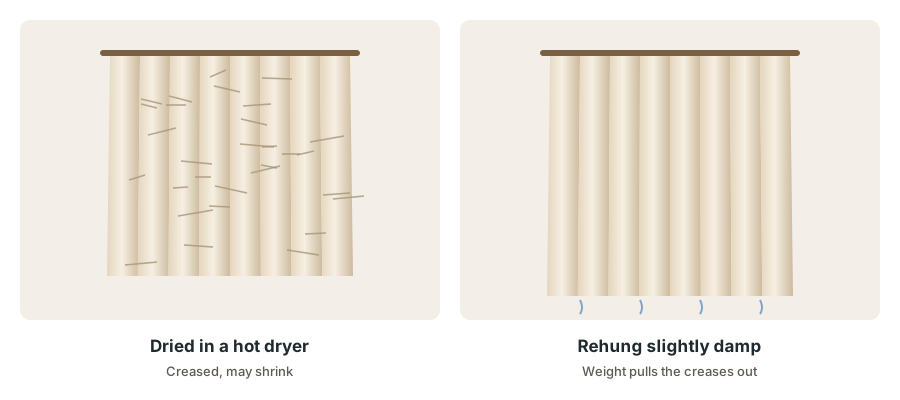
- Avoid high-heat tumble drying, which shrinks natural fabrics, sets creases and can damage coatings. If the label allows, tumble on the lowest heat and remove while still slightly damp.
- Rehang while slightly damp. This is the best trick of all: the curtain's own weight pulls out creases as it finishes drying, so you often don't need to iron.
- Open the windows or use a fan to help curtains dry quickly on the rod, especially in humid weather.
- Make sure they're completely dry before closing them against a window, to avoid mildew.
Ironing and steaming curtains
Steaming
A handheld or upright garment steamer is the easiest way to remove creases from curtains, because you can steam them while they hang.
- Hang the curtains on the rod.
- Hold the fabric taut at the bottom with one hand.
- Move the steamer slowly from top to bottom, keeping it a few centimetres from the fabric unless the instructions say otherwise.
- Let the fabric cool and dry before closing the curtains.
Steaming is safe for most fabrics, but test on a hidden area first, especially on velvet, silk and coated fabrics.
Ironing
- Check the iron symbol and use the correct heat: low for delicate synthetics such as acrylic and nylon, medium for polyester, silk and wool, high for cotton and linen.
- Iron while slightly damp for cotton and linen.
- Iron on the reverse side for dark colours, to avoid shiny marks.
- Use a pressing cloth on delicate fabrics.
- Never iron blackout or thermal coatings directly; they can melt or crack.
- Iron long curtains on a large surface, such as a table covered with a towel, supporting the weight so the fabric doesn't stretch.
Quick reference: washing by fabric
| Fabric | Usual method | Water | Drying | Iron |
|---|---|---|---|---|
| Polyester | Machine, gentle | Cool–warm | Line or low tumble | Low–medium |
| Cotton | Machine, gentle | Cool–warm | Line dry | High, while damp |
| Linen | Gentle machine or hand | Cool | Line dry, rehang damp | High, while damp |
| Voile / sheers | Machine in a bag | Cool | Rehang damp | Low |
| Polyester velvet | Gentle machine if allowed | Cool | Line dry | Steam only |
| Silk | Professional | — | — | Low, pressing cloth |
| Coated blackout | Gentle machine if allowed | Cool | Line dry, no heat | Never on the coating |
| Lined / interlined | Professional | — | — | As advised |
This table is a general guide. The care label on your curtains always comes first.
Drying curtains in humid weather or small homes
Large curtains take a long time to dry, especially in humid weather or homes without outdoor space. Some tips:
- Use a low spin speed to reduce creasing, then press out extra water with towels.
- Rehang on the rod with windows open and a fan running nearby. The full length of the curtain hangs in moving air, which dries it faster than a drying rack.
- Wash one panel at a time, so each dries before the next.
- Choose a dry, breezy day for washing heavy curtains.
- Use a dehumidifier in the room if you have one.
- Make sure curtains are fully dry before closing them against a window, to prevent mildew.
Cleaning curtains without taking them down
For heavy, lined or hard-to-reach curtains, or between washes:
- Vacuum thoroughly with a brush attachment.
- Steam clean with a garment steamer to refresh fabric and reduce odours. Make sure the curtains dry fully afterwards.
- Spot clean marks with a damp cloth and mild detergent.
- Air them by opening windows on a dry, breezy day.
- Use a fabric freshener suitable for the fabric, testing it on a hidden spot first.
- Book an in-home cleaning service for large or interlined curtains; some companies clean curtains on the rod.
Removing common stains
Always test any stain treatment on a hidden area first, and blot rather than rub, which can spread the stain and damage the fabric.
- Water-based stains (drinks, mud): blot with a clean cloth dampened with cool water and a little mild detergent.
- Grease and cooking oil: sprinkle cornflour or baking soda on the spot, leave it to absorb the grease, brush it off, then treat with a little washing-up liquid diluted in water.
- Watermarks: lightly dampen the whole area evenly, from the mark outward, so it dries without a ring.
- Wax: let it harden, gently scrape off what you can, then place paper towel over the mark and press briefly with a warm iron (only on fabrics that tolerate heat) to lift the rest.
- Pet accidents: blot immediately, then use an enzyme-based cleaner designed for pet stains, following its instructions.
For valuable or delicate curtains, or stubborn stains, a professional cleaner is the safest choice.
Dealing with mildew, mould and musty smells
Curtains near damp windows, in bathrooms, or in humid climates can develop mildew, which appears as grey, black or green spots and smells musty.
- Take the curtains down and shake or brush off surface mildew outdoors, to avoid spreading spores indoors.
- Wash them on the warmest setting the label allows, with detergent.
- For washable, colourfast fabrics, many people add a cup of white vinegar to the rinse to help remove musty smells. Test on a hidden area first.
- For white cotton or polyester, an oxygen-based stain remover suitable for the fabric can help lift marks; follow the product's instructions.
- Dry completely, ideally outdoors in fresh air but out of strong direct sun.
- Fix the cause: wipe condensation from windows, improve ventilation, and leave a small gap between curtains and damp walls.
If mildew has spread widely or keeps returning, the fabric may be permanently damaged. Heavily affected curtains, especially lined ones, are often best replaced.
Removing odours
- Cooking smells: wash kitchen curtains more often, and use your extractor fan while cooking.
- Smoke: wash washable curtains; for others, professional cleaning works best. Airing outdoors helps too.
- Pet smells: vacuum regularly and wash with an enzyme-based laundry product suitable for the fabric.
- General staleness: airing on a breezy day and steaming often refreshes curtains between washes.
Care by curtain type
Polyester
Usually machine washable on a warm or cool gentle cycle. Dries quickly; rehang damp. Iron on a low to medium setting if needed, since polyester can melt or go shiny under high heat.
Cotton
Often machine washable, cool to warm. Can shrink in hot water or a hot dryer. Iron while damp on a high setting.
Linen
Wash cool and gentle, avoid hot drying, and rehang damp. Iron while damp on high, or embrace the relaxed creases. See our linen curtains guide for more.
Velvet
Many polyester velvets can be washed gently; cotton and silk velvets usually need dry cleaning. Never wring velvet. Steam rather than iron, from the back, to avoid crushing the pile.
Silk
Usually dry clean only. Silk is weakened by sun and water marks easily. Vacuum gently between cleans.
Sheers and voiles
Wash often in a laundry bag on a gentle, cool cycle. Hang damp to dry. Use an oxygen-based whitener suitable for the fabric to keep whites bright. Our sheer curtains guide includes more tips.
Blackout curtains
Coated blackout curtains need special care: cool, gentle wash only if the label allows, no high-heat drying, and never iron the coating. Triple-weave blackout curtains are usually easier to wash. Our blackout curtains guide explains the types.
Thermal curtains
Similar to blackout: gentle, cool washing and low or no heat drying. Foam backings can crack with heat. Interlined thermal curtains usually need professional cleaning. See our thermal curtains guide.
Lined and interlined curtains
The face fabric and lining can shrink at different rates, causing puckering. Professional cleaning is usually safest unless the label clearly allows washing.
After cleaning: rehanging and training
- Rehang the curtains while slightly damp, if appropriate for the fabric.
- Replace hooks, rings and weights in the same positions.
- Smooth the fabric and steam any remaining creases.
- Train the folds by gently pleating the curtains and tying them loosely for a day or two.
Our guide on how to hang curtains explains how to train folds step by step.
A cleaning schedule by room
| Room | Vacuum | Full clean |
|---|---|---|
| Kitchen | Every week or two | Every 1–3 months |
| Living room | Every 2–4 weeks | Every 3–6 months |
| Bedroom | Every 2–4 weeks | Every 3–6 months |
| Bathroom | Every 2 weeks | Every 1–3 months |
| Children's room | Every 2 weeks | Every 2–3 months |
| Rarely used guest room | Monthly | Every 6–12 months |
Adjust for your home: clean more often in humid weather, near busy roads, with pets or smokers, or if anyone has allergies.
Kitchen curtains need washing most often because of grease and steam. Our kitchen curtain ideas guide suggests fabrics that wash easily and dry quickly.
Cleaning curtain rods, rings and tracks
Clean hardware keeps curtains sliding smoothly and stops dust transferring back onto freshly washed fabric.
- Rods: wipe with a damp microfibre cloth, then dry. For metal rods, avoid abrasive cleaners that can scratch the finish.
- Rings and clips: soak removable rings in warm soapy water, rinse and dry thoroughly to prevent rust.
- Tracks: vacuum the channel with a narrow nozzle, then wipe. Check gliders for damage.
- Finials and brackets: dust and wipe; check that screws are still tight.
Allergy-friendly curtain care
- Vacuum regularly with a vacuum that has a good filter.
- Wash washable curtains more often, every one to three months.
- Choose easy-care fabrics, such as smooth polyester or cotton, which hold less dust than heavy textured fabrics.
- Avoid heavy fabric fresheners with strong perfumes if anyone is sensitive to scents.
- Keep windows closed on high-pollen days if pollen allergies are a problem, and clean curtains after the pollen season.
Professional curtain cleaning: what to expect
For curtains that can't be washed at home, a professional cleaner is the safest choice. When booking:
- Ask whether they specialise in curtains; large, lined curtains need different handling from clothes.
- Mention the fabric, lining and any coatings so they choose the right method.
- Ask about shrinkage and whether they measure curtains before and after cleaning.
- Remove hooks yourself, unless they offer a take-down and rehang service.
- Consider in-home cleaning for very large or interlined curtains, where available.
When to replace curtains
Even well-cared-for curtains don't last forever. Consider replacing them when:
- The fabric has faded unevenly or become brittle from sun.
- Mildew keeps returning after cleaning.
- The blackout or thermal coating has cracked and flakes off.
- Seams, hems or headings are splitting.
- Stains won't lift, or odours return quickly after washing.
Common curtain cleaning mistakes
- Ignoring the care label.
- Washing in hot water, which shrinks natural fabrics.
- Tumble drying on high heat, which shrinks fabrics and damages coatings.
- Overloading the washing machine, which causes creasing and poor rinsing.
- Using chlorine bleach on synthetics or coloured fabrics.
- Ironing blackout coatings.
- Rehanging curtains wet against a damp window, inviting mildew.
- Washing lined curtains at home when the label says dry clean.
Frequently asked questions
Can I put curtains in the washing machine?
Many curtains can be machine washed on a gentle, cool cycle, but always check the care label first. Silk, interlined and many lined curtains need professional cleaning.
How do I wash curtains without them shrinking?
Use cool water, a gentle cycle, and avoid hot tumble drying. Rehang them while slightly damp.
Can I wash curtains with grommets?
Usually yes, if the label allows machine washing. Use a gentle cycle and consider a large laundry bag to protect the machine drum and the grommets.
How do I get creases out of curtains?
Rehang them slightly damp, steam them as they hang, or iron them on the correct setting.
Can I wash blackout curtains?
Many can be washed on a cool, gentle cycle if the label allows. Avoid hot water, high-heat drying and ironing the coating.
How do I clean curtains I can't take down?
Vacuum with a brush attachment, spot clean marks, steam to refresh them, and air the room. For a deep clean, consider an in-home curtain cleaning service.
Should I wash new curtains before hanging them?
It isn't usually necessary, but some people prefer to wash washable curtains first to remove any finishing chemicals or smells. If you do, follow the label carefully, since new cotton and linen may shrink slightly.
Can I use fabric softener on curtains?
A small amount is fine for most washable fabrics, but avoid it on blackout, thermal and flame-retardant curtains, where it can affect coatings and finishes. Check the care label.
How do I keep white curtains white?
Wash them regularly, wash whites separately, and use an oxygen-based whitener suitable for the fabric rather than chlorine bleach. Dry them out of strong direct sun.
Can I wash curtains with their hooks still attached?
No. Remove hooks, clips and loose rings first. They can snag the fabric, damage the washing machine drum and rust.
The bottom line
Keep curtains fresh with regular vacuuming, and give them a full clean every few months. Always read the care label, wash cool and gentle, avoid high heat in the dryer, and rehang slightly damp to let creases fall out naturally. Treat stains gently, tackle mildew at its source, and leave silk, interlined and many lined curtains to the professionals. With the right care, your curtains will stay beautiful for years.
Keep reading
 DIY & Sewing
How to make curtains look expensive on a budget
You don't need made-to-measure curtains to get a luxurious look. These simple, affordable tricks make inexpensive curtains look custom-made and high-end.
 DIY & Sewing
How to sew simple unlined curtains: a beginner's step-by-step guide
Making your own curtains is easier than you think. This beginner's guide shows you how to choose fabric, measure, calculate, cut and sew simple unlined rod pocket curtains, step by step.
 DIY & Sewing
How to hem curtains, with and without sewing
Curtains too long? You don't need to be an expert sewer to fix them. Here's how to measure and hem curtains with a sewing machine, by hand, with iron-on tape, or with no tools at all.